Showing posts with label United Nations. Show all posts

Sunday, April 21, 2013

Fish Story numbers on the eve of Earth Day

Earth Day http://www.earthday.org/2013/ is April 22. We have a ways to go to make Earth Day an event that reflects a realistic response to the anthropocene. There's hope but it will be a challenge for us all.

This past week, I attended an event at the Temple of Understanding at the United Nations, on the crisis- emergency of global sustainability. My take away, was that the scale and imminence of our environmental crisis is even more hazardous than I'd previously thought: that without emergency intervention over the next few years, by 2050, most of the human population (up to 8.5 billion people) would likely perish from inter-related exigencies.

Those figures are based on 2009 and 2011 calculations respectively from Kevin Anderson, Deputy Director of the Tyndall Centre for Climate Change Research, 2009 and Professor Joachim Schellnhuber, Director, Potsdam Institute for Climate Impact Research. Two of the presenters Thursday, were Ian Dunlop and Tapio Kanninen, both members of the Club of Rome. Both are optimistic about the human prognosis- if we act in emergency mode.

Slide from Ian Dunlop's presentation at the UN Temple of Understanding.

I discussed with them how ecological art, as Fish Story could contribute to the solution. My thinking behind Fish Story has been that if people are stuck on these massive problems, to just focus on fish. People care about fish on their dinner plate and at the end of a hook. Fish bring us to water quality which depends on habitat and that comes to restoration. Fish Story is a restoration plan based on working backwards from global warming to the individual. That is where the promise of empowerment lies: in individuals, working as part of larger communities, who can re-green our planet.

April 8, 2013 I had asked our Fish Story team member James White the following question:

if we had a time frame for when we might totally turn over to alternatives and the carbon "cost" of that time lag, how much might that "cost" be "off set"  by how much potential restoration to mitigate the impacts until we're totally off fossil fuels? For example, if the total turn over is 2030, how many millions of acres of increased green (forests, wetlands, prairies, etc- even increased tundra as the ice melts, despite the loss of albido?) would be required to offset the carbon impact of using that much fossil fuel (I know it would probably be astronomical but I'm curious whether there could be even a ball park assessment.)?


These were his numbers:


On Apr 8, 2013, at 12:13 PM, James White wrote:


There are no simple answers to this, but here's the best I can do:

We emit globally about 10 BMT/yr of  carbon (billion metric tons per year) in FF burning and deforestation. In 20 years, that would mean about 200 BMTs.

There are about 550 BMT of carbon in all plants above ground, and 1,500 BMT below ground (in soil carbon), so you need to add about 2% to the living global biosphere every year to offset the above. In 20 years that would mean you need to add 36% to the living biosphere to offset FF's and deforestation, or you'd need 1/3rd more biosphere in 2030 to do the offset. Its less if you can figure out a way to speed up the transfer of carbon form the living bits to the soil carbon pool.

The obvious problem is where do you find 1/3rd more land, nutrients, water, etc. to make this work? Neither easy nor clear…

Jim
Finding that 1/3 is what Fish Story will start doing, in Memphis, in just two weeks.

Dunlop is the former senior executive of Royal Dutch Shell, past Chair of the Australian Coal Association and Australian Greenhouse Office Experts group on Emissions Trading 1998-2000, current chair of the Australian National wildlife Collection Foundation and Deputy Convener of the Australian Association for the Study of Peak Oil, advising on governance and sustainability.

Kanninen is a Senior Fellow and Co-Director of the Project on Sustainable Global Governance at the Ralphe Bunche Institute for International Studies at the graduate Center of the City University of New York and past Chief of the Policy Planning Unit of the UN Department of Political Affairs (1998- 2005) and Head of the Secretariat of Kofi Annan's five Summits with regional Organizations. He recently authored the Crisis of Global Sustainability http://crisisofglobalsustainability.com/about-the-author/.


Friday, November 2, 2012

Art, climate change and politics

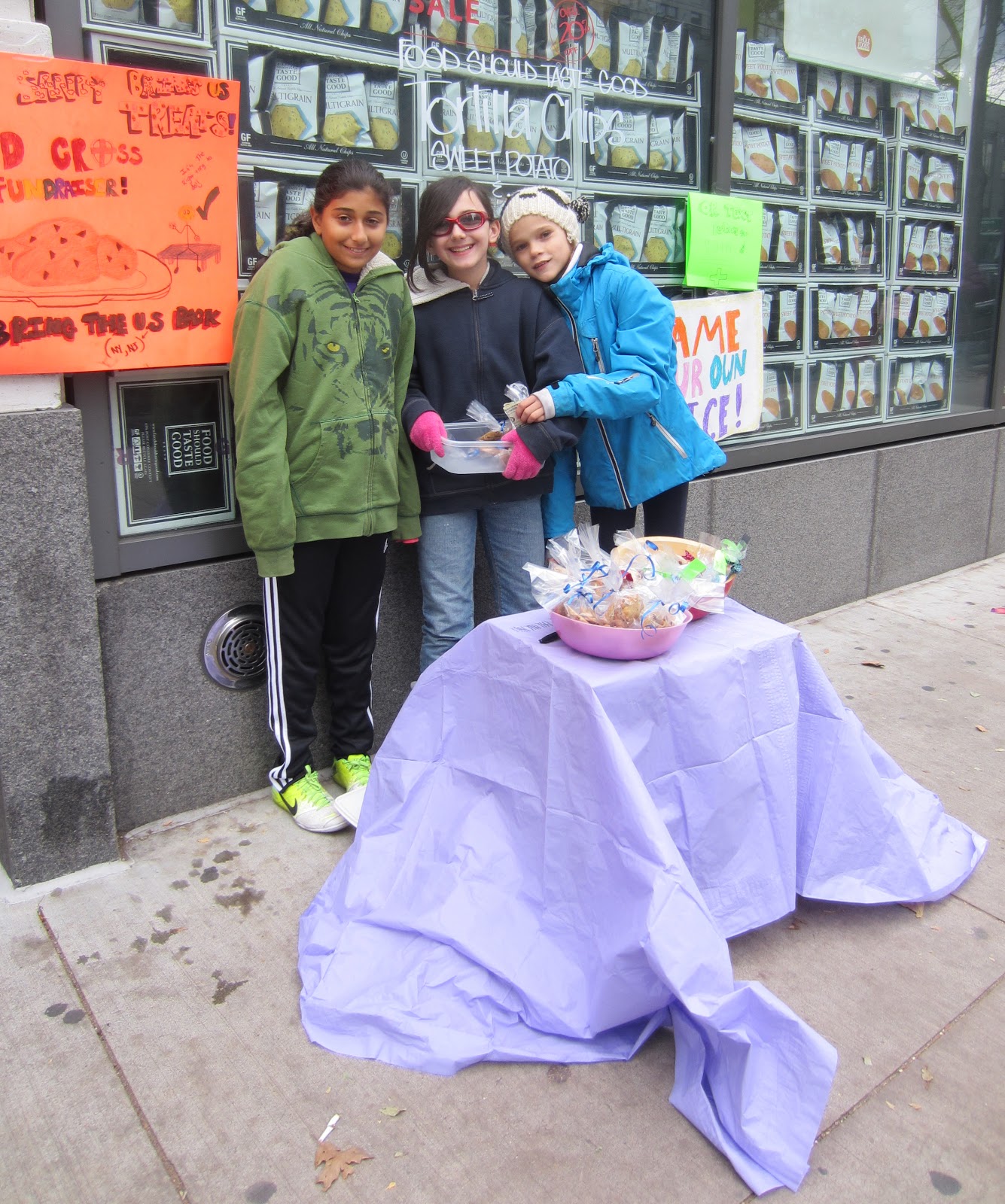
Girls outside the UWS Whole Foods raising $ for the Red Cross by selling homemade cookies. It was nice to give them a dollar and let them keep the cookies instead of my usual dollar to hopeless homeless people.
The coming together of people to support the city they love has been very moving to me

http://www.vulture.com/2012/11/jerry-saltz-devastating-visit-to-chelsea-galleries.html
  • This is an amazing, heart breaking account from Jerry Saltz, of loss and heroism to flank the stories of trying to help the elderly & infirm victims of the Hurricane Sandy disaster or my own posts about the impact on animals, as the fish and birds in the Tri-State region. All martyrs to climate change denial. 
  • Art is like a beating heart that lives outside a body. And now it has become disconnected and trashed. a bunch of those hearts have been ripped from those bodies by the tidal surges and sea level rise of global warming driven by fossil fuel production. I am grateful to Jerry for being one of her caretakers.
  • As he wrote, it's easy for us to knock the gallery system, dealers, etc, But these are our blood kin. I was esp upset about Printed Matter, an institution-cum-museum of alternate art and a real tragedy. 
I woke still haunted by the implications of Jerry's essay. What haunts me is the combination of the cultural impact of climate change and the personal implications of the rise of the right. They are inseparable.

In 2009, I was an official observer for the University of Colorado at Boulder, where I am an affiliate, for the United Nations IPCC meetings at the Bella Center in Copenhagen. 
http://www.ipcc.ch/
I blogged about my experiences and observations:

http://www.blogger.com/blogger.g?blogID=3532459556869820195#allposts

The most moving of all the presentations then was from the island nation of Tuvalu http://www.tuvaluislands.com/.

To standing room only, they held a session about the loss of their homeland to sea level rise, with flowers, dancing, song, giving us all necklaces and impassioned pleas to hold the island nations in mind as we discussed climate change.

There was a lot going on then, but one of the actions I was involved with was an ethical action group, led by Don Brown http://blogs.law.widener.edu/climate/ who had worked on toxic waste sites in the Clinton administration. We crafted the press releases for the press conference and one of the points I focused on was language in the IPCC documents to the effect that we must protect the cultural treasure of impacted nations, such as Tuvalu, as much as we concern ourselves with economic sustainability. I vividly recall crafting phrases for that press release, to the effect that culture is what holds a people together and allows them to be resilient.

I had been scheduled to give our own press conference, on the work Jim & I were doing as a precursor to Fish Story: "Gulf to Gulf," when the police cordoned off the Bella Center and began beating demonstrators in the City of Copenhagen. That was followed in swift reprisal, by a flood of corporate funding to seed global doubt over global warming, drown out the island nations and scientists and culminating with the present Citizens United decision which has allowed one party to, in effect, precipitate a corporate take over coup of the United States.

Previously, in work with Jim White, of INSTAAR who enabled my attendance at the iPCC, we had spoken about our horror over, and generated visuals from, studying the projected global impacts of climate change refugee migrations. Our horror was over the human cost.

Most of the attention to the impact of of Hurricane Sandy in NYC has gone to Wall St and transportation to get back to work and return to normal life. What people are missing is that this is the new normal. NYC is also an island "nation" in the same peril, with the same implications as the fate of Tuvalu. And NYC is the canary, singing for all she is worth about the peril we all face. Jerry is a good microphone for that song.