Showing posts with label Hurricane Sandy. Show all posts

Friday, March 22, 2013

Connecting the art market to Fish Story, to the Rockaways, to Memphis in May

Recently, I collaborated with the ecoart collective to send a video proposal to MoMA, on the occasion of their call to "rebuild" the Rockaways waterfront since Hurricane Sandy. http://www.ecoartnetwork.org/wordpress/moma-expo-1-new-york-rockaway/. I believe the same issues facing the Rockaways are facing the fish in Memphis or the art market in NYC. They are all fulcrums. 

The basic response from the ecoart collective was that the very idea of rebuilding the Rockaways waterfront in the anthropocene is an oxymoron. Rather, as the artists Newton and  Helen Harrison have suggested, we need to "withdraw gracefully." The solution I see, isn't always withdrawal. The variations depend on thinking bioregionally and then looking for "trigger points," to effect environmental justice. It always starts, not with the people, but the animals. That is why I keep coming back to fish for Memphis (Fish Story).

On Jerry Saltz's FB page yesterday, Mia Pearlman posted a link to Ed Winckleman's blog decrying the state of the art market today. My response, which I've posted below, was that the art market only reflects the global crisis. To my way of thinking, the ecoart collective's video was a response to that insanity, and for that reason, I would be very pleasantly but nonetheless surprised if MoMA likes it (my implication being that MoMA is the belly of the art market beast). That said, I think the "answer" to the art market/ fish/the anthropocene will be collective. The panel I suggest at the end of this post is specific to the art world but the premises could easily be expanded in the right venue:


Here's the link to Ed's page http://www.edwardwinkleman.com/2013/03/saving-endangered-true-believers.html — with Edward Winklemanand here is my long-winded response:

I really appreciated this post & thread. I was so dismayed by my art fair experience last weekend that after just one 2 hr stint, I went home & took a long nap. The most interesting work I saw were the women who could walk on ultra-high heels. 

Exhibit A of the NY Art World Fairs


The recommendations (in Ed Winckelman's blog) are great but what I think is happening to the art world precisely mirrors what is happening environmentally and economically: as species (and classes and roles) get hollowed out, connections break and the entire system gets pushed past a threshold point of collapse where it will self-organize.

As an ecological artist, on the one hand, I think it is possible to predict what will precipitate the "last straw" that will create that self-organization. I have been saying for a while, that the best hope is in understanding physics. There is a point (that I call a trigger point when it is deliberately calculated) where Maxwells' "demon information" can displace the old system. I can calculate that environmentally, but the art market in some ways is still less over-simplified than what we see in ecosystems in the anthropocene. The problem I see that needs to be examined, is what are the factors that go into modeling predictively?
I presume, based on thinking about the natural environment, that the greatest factors are neither obvious nor easy to move, such as capitalism run amuck. On the other hand, if my reference to physics is correct, it may just take the right small trigger to effect change.
I can only go back to what I work on in my own practice as a model. 

Right now, I'm experimenting with trying to recapitulate the pressure, multi-tasking and preparation work that will go into solving climate change in a project I'm preparing for May in Memphis (Fish Story). I see that as an endurance performance. The personal trick for me, is how to do that without burning out & crashing before I get there, let alone afterwards.
The relevance of my practice model to the art market is that if the artist is the "trigger point" in the critical shift we all need, the question is how individual artists are going to survive the present? The short answer is not easily and not alone. Artists have been competitively divided from dealers and each other. But no matter how powerful insanity may be in the art world right now, like fracking, there are many more of "us" losing from what is happening than there are of "them" gaining big time at everyone else's expense.  

When Rob Storr recently addressed the College Art Association (CAA) with a litany of what the schools & academia are doing wrong, instead of complaining about how he was a "downer," I think he should have been heard as a clarion call from Cassandra. His talk and some others last month at CAA, this blog and the responses, Jerry's FB page are parts of what keeps me going so I don't crash in isolation as an artist. I believe we can be the 99% if we make ourselves heard. 

The simplest answer to what can be done is to say it more and say it loudly. This is a collective endurance event.

As I was typing this, I got a call from the artist Carolee Schneemann and we talked about where values and discernment had gone these days (out the window). Values & discernment will go the way, I think of this entire world unless those of us who care passionately about a different set of values find our collective voice. That process of finding a collective voice, is, I think the "demon information" that could trigger a change.
Will it bring back a past we loved or at least sentimentally enjoyed in our lifetimes? Not for many polar bears or elephants, not for the people who now have polluted water and not for many of us in one aspect or another of the art world in our lifetimes. But something & some of us will survive with integrity.

My suggestion: put together a panel some place very visible, inc Ed, Jerry, Rob, Carolee, Alain & whomever else has a clear voice (more articulate women) and drag people to it with a media campaign that connects these issues to all the others we are facing globally.
Add Mira Schor and Mierle Ukeles to that panel.

Wednesday, March 6, 2013

Old rules, new ideas to connect the dots from Maine to Sandy to Memphis


Old rules, new ideas


1.     Do no harm
2.     Fix what’s broken
3.     Make wise choices

I'm proud to be part of the solution on Friday, at this year's NES 12th Annual Colloquium "Superstorm Sandy: Before, During and After" http://opencuny.org/nature/ at CUNY.

I will present the culmination of 2 years of GIS research on how to support finfish in the Gulf of Maine. This is an exciting opportunity to discuss with others how to contribute to future policy solutions. The work offers a means to apply the principles of trigger point theory to target where we might focus restoration work to support dwindling biodiversity. This project demonstrates how to leverage small efforts to address systemic impacts before and after the effects of climate change.
Old rules, new ideas.

The research I will present is some of the raw material for Fish Story.

Wednesday, November 14, 2012

Fish Story update

I am pleased to announce that, "Pushing Rocks,"a place to think about the impact of climate change and other anthropocene effects on fish, has just reached 1250 hits since we launched the blog. I have temporarily changed the settings, in celebration, so that friends of Fish Story can post more of their own stories.

Fish Story, is part of the "Gulf to Gulf" project of webcasts about the impact of global warming on gulf regions internationally. It was formally launched October 19, 2012 and Hurricane Sandy hit New York City, October 30. It was a pre-Halloween witch and an October surprise for the presidential election.

Since then, I've been trying to write about the relationships I see between fish, global warming and the kinds of attitudinal and policy changes we may need to make now to avert future disasters ... and to seeing many fewer fish.

Sandy, btw, now has her own wikipedia entry: http://en.wikipedia.org/wiki/Hurricane_Sandy.

I invite you, my dear readers to add your thoughts to this mix.

Note: we had some tech troubles today, so if you tried but still couldn't post today, please don't give up. Try again tomorrow.

Acts of gods (lower case and top down)

added the text: "policy makers" to the center of the lavender dot on Washington, DC beneath Hurricane Sandy on the visual that came from yesterday's Acts of God "Gulf to Gulf" webcast.


There is no doubt in my mind that the cause of Hurricane Sandy was passive, tin god policy makers in Washington, DC, who lie down (present tense) to accept $ from corporate fossil fuel funders to determine environmental regulations.

Monday, November 12, 2012

Acts of God

Tropical Cyclone Storm Surge Probabilities, NOAA site
Chance of Storm Surge >= 2 feet (NGVD-1929) at individual locations
Sandy (2012) Advisory 31
For the 77 hours from 11 PM EDT Mon Oct 29 to 04 AM EDT Fri Nov 02

Unlike my academic writing for my dissertation, on this blog, I can own my opinions without too many citations. I have a few opinions about Hurricane Sandy.

Hurricane Sandy has turned many lives upside down in NYC, not to mention those lost but we have never so desperately needed to invert our ideas about our relationships to nature, from infinite expansionism and extraction to accepting our limits while exercizing infinite empathy. we used to say that major weather events were an Act of God. I charge that Hurricane Sandy was an act of stupid white men. Michael Moore's Stupid White Men were DC policy makers. I think we are all stupid white men when it comes to the environment. We have made a world where Cuomo and Bloomberg can talk about storms like Hurricane Sandy becoming routine. We have replaced god, with our own stupidity.

In considering my new project for Memphis, Fish Story, I am still thinking about fish: the fish that have now lived (if they still live) in a toxic soup of chemicals and sewage for almost two weeks (not to mention the birds that eat them or the small life the fish normally consume). In a "normal, healthy" estuarine system which historically surrounded Manhattan Island with fecund abundance, Sandy should be part of a cycle of high impact phenomena to bring even greater nourishment and support to this bioregion. Instead, we have made a charnel house of this region.

Humans, particularly white European colonists and their progeny since 1650, have ignored any attention to how things work in their own world, except as they serve short term interests of acquiring material wealth and power. New York City, is in fact the icon of exactly that acquisition. It has been enormously successful in proselytizing that ethos and exporting it globally out to the world. the consequence of all that "success" is this disaster. We expanded to the point of what Jared Diamond wrote of as Collapse, filling in the wetlands that might have protected us. What has collapsed is the fertile, protective natural system that protected us and the built infrastructure that replaced it. That collapse signals an opportunity to exchange and invert our priorities. To exchange expansionism for empathy for all life. If we live with empathy, we cannot countenance what we have done to this planet. If a god had any part in Hurricane Sandy, it was in the circumstantial conflation of a climate change event and the Apple, days before an election for president of the USA.

It has been incidental to the success of our great expansionist society, that NYC is also full of begging homeless people, extracted from a culture that has no place for them.

Drawing of homeless woman begging across the street from Bloomingdales, May (from Homeless in the Apple project) 2012 Aviva Rahmani
Now, we are talking about the impact of global warming. In my opinion, global warming is the symptom of a terrible spiritual disease that is literally killing the whole world. My opinion is that Hurricane Sandy, as part of global warming in the anthropocene, is a spiritual wake-up call. The spiritual part has little to do with gods in the world and everything to do with the moral power of empathy for what is not us. Hurricane Sandy was not an Act of God. It was the backdraft of many acts by many people who chose convenience, expedience and short term gain (including myself) over encompassing a view of the world which might include the suffering of others, whether fish or homeless women across the street from a luxury emporium. As I type, I am listening to Brian Lehrer on WNYC speaking to a caller from Coney Island, describing old people walking down 14 flights of stairs to deliver a bucket of their own waste to the street level. None of that misery is the consequence of an Act of God.

Tomorrow, I will record another Gulf to Gulf webcast to discuss the science behind this new normal reality in depth with Jim White, my collaborator from INSTAAR and will post the url after we are done. Friday evening, I will participate on a panel at LIU in Brooklyn about fracking and social media. I will also post further about that here before the event. They are connected: the fish, the homeless, the old people with a bucket of waste, fracking and the world crying for an ethos of empathy rather than expansionism. And it is here, on the net, where we can advance another point of view, one that might invert our present headlong trajectory towards destruction.

Wednesday, November 7, 2012

Drawing for all we're worth

On the ecoart art list serve http://www.ecoartnetwork.org/, my friend Lenore Malin asked recently whether people need to move from the coast? She asked who pays for all that? She and Jackie Brookner, both fellow artists, had gone to help in the Rockaways, devastated by Hurricane Sandy http://lenoremalenblog.com/in/utopia. The activist artist and educator Beverly Naidus said she has a student who replies, when people ask him what he does, that he draws to save the world.

Young men enjoying Hurricane Sandy, Photo credit, Chandler Blackington, November 4, 2012
 Vinalhaven Island, Maine


As far as what to do about the shoreline, I may have written this before, but when I asked the late wetlands ecologist Michele Dionne about that, years ago, she replied: insurance. The insurance companies would stop insuring structures too close to sea level rise and eventually people would stop building there. And that's what is happening.

Except that many companies got various kinds of federal back-up, not just in flood prone regions but also fire prone areas of the SoWest, leaving too many in the way of Sandy & ginormous forest fires.

Who's to blame and who's to pay?

Well, we can start with anyone who blew off a science class and every legislator who cut funding for the sciences, along with the arts. And we can ask why the insurance companies, like the financial institutions that brought us the on-going economic crisis, are still being artificially propped up.

Living on the coast is a calculated risk these days and will increasingly be. But so will living in fire/flood/drought/storm paths. In other words, this is the world we have wrought by ignoring how things work. By ignoring how things work, I mean biogeographic dynamics, imagining that small scale solutions can be disengaged from larger forces and privileging the grand designs instead of all the little parts of microhabitats that hold bioregions together.  And that echoes economically as much as biologically.

In short, we have made our own sci fi reality by ignoring garden variety reality.

Based on the scientific discussions I have been having since 2007 with Jim White and others, we have entered the accelerated fast phase of climate change. There are landscape level precedents for ecosystems to evolutionarily adapt resiliently to Large Impact Disasters (LID).

Maybe. If so, we aren't seeing most people either rushing to solutions or getting the education and support they need for a chance at a resilient transition.

Biologically, the solution is called evolutionary adaptation. But even evolutionary adaptation has a cost.

I am not sanguine about this situation nor am I cold about it. I think 100's of millions of people may die in our lifetime because we here in Rome fiddled and lost time in our opportunities to address global warming and establish transitions for evolutionary adaptation. The cause of these deaths would only tangentially be directly from natural disasters. Most would come from the geo-demographic change that will result from massive socio-economic and cultural disruptions as people find their own ways to adjust.  Meanwhile, the ones who might die won't be the Romney's of the world, who laughed at sea level rise and advocated drill baby drill. 

In 2007, when I realized what we were facing, I was shaking with hysteria over the implications for months. A year later, I decided to do a PhD that would tie together what I knew and present the research to back it up. The program, Z-Node, a division of the Planetary Collegium with the University of Plymouth in the UK, blends environmental sciences, studio art and technology.

So as some know, I have been writing a dissertation on an original theoretical approach that I believe might support resilience: "Trigger point theory as aesthetic activism," and have periodically posted to my friends about my progress, "Reports from PhD Land."

My current "Report from PhD Land," is that I'm about half thru the writing now, which takes forever and that is still not what I need to do to make it into a trade book. That's at least years to come to get the ideas in front of anyone who might pay attention and be able to act on whatever I put forth ....if in fact, it amounts to real new knowledge anyone doesn't already know by then.

Realistically, it's a grim landscape, a brave new world that is not for the faint-hearted.

Meanwhile.

I guess we keep drawing for all we're worth.

Still shot Aviva Rahmani November 8, 2012 from Bill Viola's 2005 "The Tempest" in Chelsea at James Cohan. Riveting tonight with the pungent smell of flood waters still intense in my nose from my walk North from the closed galleries on 22nd St.

Tuesday, November 6, 2012

Choices, homesteading, microhabitats, fish and trigger point theory as pragmatic ethics


Detail of 20'x40' chalk blackboard mural created for ecological novelty conference in Monte Veritas, Switerland, 2011

Like any addict on this election day, despite mental self-destruction, I can't turn off the WNYC voting reporting on the radio. Truth is, so much is at stake this time: civil rights for so many, global warming & the environment, democracy & economic sanity... I still hope to do the phone banks today. But the other part of me, wants to turn all the news off until this time next week.


I believe I understand the mentality of climate change deniers. I think they are in one of the early stages of grief: the first is denial. Then people in grief cycle thru anger, bargaining, sadness and finally acceptance. The same biological drivers that make deniers want to put their heads in the beach sand, are the same impulses that make me want to pull my mental covers over my head until next week. I've posted for years on FB & elsewhere about the dangers I see from bigotry and exclusionary practices, unrestrained corporate power, creeping fascism, deprivation solutions. I've argued with relatives, made art, launched webcasts and other projects to erect a seawall against what I see as ignorant blindness and today, when so much is in the balance, my vote was cast a month ago with an absentee ballot. I am struggling with a bad head cold and don't know if I have the stamina to do volunteer work on the phone banks. So it is out of my hands right now: all of it.


That's not all, of course that's out of my hands. But I, we, still have choices. Choices must come from informed values and a set of ethical premises that do no harm. I think we can all agree on that premise.


The values I want to address today are those that connect us in the world and conserve human welfare. I'm not talking about some Kumbaya Lala land. I mean linking ourselves to ecoregions and other species, because whomever is elected today in the USA, that is the thinking, I believe that may save us as a species and conserve our welfare. Water is the fount of life for all and water conservation is also about conserving other species: living bioregions.


An ecoregion is how geographic features, such as rivers and oceans, mountains and valleys create what landscape ecologists call a mosaic of habitat patches. On the macro level, the function of these mosaics in ecoregions, is to preserve clean water for all life on earth. On the micro level, what links the patches of these systems, are the communities of animals and plants that make up an ecosystem. That is why environmentalists battles so hard to save the wolves, bears, lions and other megafauna: they are the regulators in these large systems. There is no chance, anywhere in the world, that such large predators will overtake the earth. They are not the apex predator. Humans are. When the populations of an "apex" predator, such as humans run amuck without any resistance, as we are seeing today, all the smaller biological links become so disrupted and the matrix of what environmental economists call "natural resource services," frays and begins to collapse. That point of collapse results in what biologists call "novel" ecosystems. That means they get weird & unpredictable.


The summer of 2011, I was one of a handful of artists at an international conference on novel ecosystems, held in Monte Veritas, Switzerland, hosted by the prestigious ETH http://www.ethz.ch/about/index_EN. At one point, I drew a large temporary mural on a vast blackboard with colored chalk (see illustration), asking the audience to call out key words that were on their mind as a result of the presentations as I wrote them on the board. The terms that were called out, weren't taxonomic. The words called included, "complexity, fear, confusion." 


Scientists, like any other demographic that has gotten past the stages of grief over what we have done to our planet, are experiencing what Glenn Albrecht has called, "solastalgia," http://schott.blogs.nytimes.com/2011/05/17/solastalgia/. They are frightened by what we are coming to accept. The recent flood from Hurricane Sandy in NYC is an example of what that acceptance means, along with chronic fights against fossil fuel industries, as fracking and their representatives on the right decimate our waters and our air. We can't in fact, separate these ecosystemic consequences from our political and personal choices, personal choices such as are being exercized in the USA with the national election of our next president.


There are many more complex choices I believe we need to examine. An example is how we fail to connect large bioegional dots. On the bioregional level along the Mississippi River, the choices we make over what supports fossil fuels, also determines the fate of fish in those waters. When the use of fossil fuels warm temperatures, fish literally cook alive in the warmer waters which can reach over 98 degrees. When climate change causes droughts that require dredging the river to allow barge traffic, the habitat for fish is as utterly destroyed as when marine fish habitat is destroyed by trawlers that stripmine the ocean floor.


Another example is how we fail to connect small dots. Many people think the answer to fossil fuel industries is "get off the grid." and homestead. There are two problems with that choice. The first is that fragmenting ecoregions into small plots of less than 10 acres, usually transformed into agricultural plots without the fine shadings between microhabitats that support whole sytsems, it creates what the Wildlands Project  http://stewardsofthesequoia.org/Wildlands_Project.html has called a sink for biodiversity, because domestic cats and other medium size predators such as raccoons can decimate birds but large predators can't control the populations of those mesopredators. The second problem is that by conceiving of land as a series of self-contained patches, we lose sight of and most often diverge from and destroy ecoregional integrity when people divert waters and create farmland out of woodland. We simply have too many people and not enuf biogeographic literacy today to look to homesteading as a solution.


What I think we need instead, is a shift of conciousness to what former physicist & philosopher Edgar Morin has called an "ecology of action." Or, what I propose as the ethical mentality of "trigger point theory," in which each choice, each action, connects us to a larger whole, in which bioregions, water and other species are the complex matrix within which we must fit ourselves. The alternative is to fit the world to our needs. And we have seen how well that works. 


Friday, November 2, 2012

Art, climate change and politics

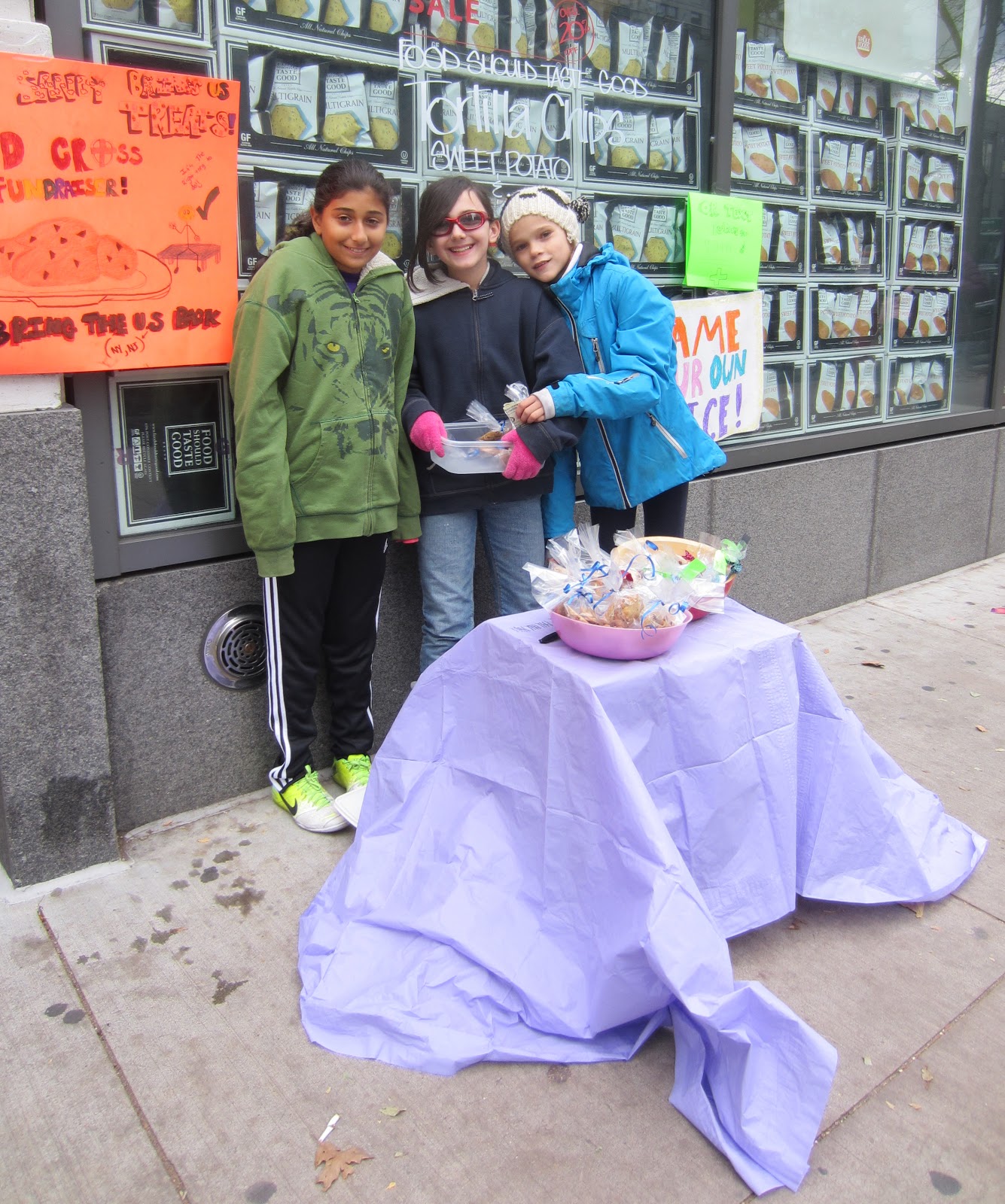
Girls outside the UWS Whole Foods raising $ for the Red Cross by selling homemade cookies. It was nice to give them a dollar and let them keep the cookies instead of my usual dollar to hopeless homeless people.
The coming together of people to support the city they love has been very moving to me

http://www.vulture.com/2012/11/jerry-saltz-devastating-visit-to-chelsea-galleries.html
  • This is an amazing, heart breaking account from Jerry Saltz, of loss and heroism to flank the stories of trying to help the elderly & infirm victims of the Hurricane Sandy disaster or my own posts about the impact on animals, as the fish and birds in the Tri-State region. All martyrs to climate change denial. 
  • Art is like a beating heart that lives outside a body. And now it has become disconnected and trashed. a bunch of those hearts have been ripped from those bodies by the tidal surges and sea level rise of global warming driven by fossil fuel production. I am grateful to Jerry for being one of her caretakers.
  • As he wrote, it's easy for us to knock the gallery system, dealers, etc, But these are our blood kin. I was esp upset about Printed Matter, an institution-cum-museum of alternate art and a real tragedy. 
I woke still haunted by the implications of Jerry's essay. What haunts me is the combination of the cultural impact of climate change and the personal implications of the rise of the right. They are inseparable.

In 2009, I was an official observer for the University of Colorado at Boulder, where I am an affiliate, for the United Nations IPCC meetings at the Bella Center in Copenhagen. 
http://www.ipcc.ch/
I blogged about my experiences and observations:

http://www.blogger.com/blogger.g?blogID=3532459556869820195#allposts

The most moving of all the presentations then was from the island nation of Tuvalu http://www.tuvaluislands.com/.

To standing room only, they held a session about the loss of their homeland to sea level rise, with flowers, dancing, song, giving us all necklaces and impassioned pleas to hold the island nations in mind as we discussed climate change.

There was a lot going on then, but one of the actions I was involved with was an ethical action group, led by Don Brown http://blogs.law.widener.edu/climate/ who had worked on toxic waste sites in the Clinton administration. We crafted the press releases for the press conference and one of the points I focused on was language in the IPCC documents to the effect that we must protect the cultural treasure of impacted nations, such as Tuvalu, as much as we concern ourselves with economic sustainability. I vividly recall crafting phrases for that press release, to the effect that culture is what holds a people together and allows them to be resilient.

I had been scheduled to give our own press conference, on the work Jim & I were doing as a precursor to Fish Story: "Gulf to Gulf," when the police cordoned off the Bella Center and began beating demonstrators in the City of Copenhagen. That was followed in swift reprisal, by a flood of corporate funding to seed global doubt over global warming, drown out the island nations and scientists and culminating with the present Citizens United decision which has allowed one party to, in effect, precipitate a corporate take over coup of the United States.

Previously, in work with Jim White, of INSTAAR who enabled my attendance at the iPCC, we had spoken about our horror over, and generated visuals from, studying the projected global impacts of climate change refugee migrations. Our horror was over the human cost.

Most of the attention to the impact of of Hurricane Sandy in NYC has gone to Wall St and transportation to get back to work and return to normal life. What people are missing is that this is the new normal. NYC is also an island "nation" in the same peril, with the same implications as the fate of Tuvalu. And NYC is the canary, singing for all she is worth about the peril we all face. Jerry is a good microphone for that song.


Wednesday, October 31, 2012

Forgotten victims of Sandy, the ultimate Fish Story

In 2010, I began a series of images about the impacts of oil on water.
What we often cannot see beneath the translucence of afflicted waters is all the life gasping to survive:

"Oil & Water" detail of artists book cover
Date of Work: 2011
Size: 11.25" x 11.25"x 3/4”
Description: Etched plexiglass box containing 12 digital prints on Japanese Digital Niyodo Kozo paper
Notes: Detail of "Oil & Water" artists book shown in “One of a Kind,” an exhibition of unique artist's books at Pierre Menard Gallery, Cambridge MA and in Unbound – An Exhibition in 3 Chapters, Dalhousie Art Gallery, Halifax, Nova Scotia, curated by Heide Hatry.

This may be the ultimate fish story: what is happening to the waterways of the Tri-State region.
Something more to bear in mind as we all check on each other and worry about the election outcome- the ecological impacts of this disaster are substantial: all our local waterways, which so many have worked so hard to clean up, are now pulluted with gasoline and other toxins. Fortunately, this has occurred after most birds have migrated THIS time but there are plenty of other critters who had no place to escape to, inc all the fish in these systems. This is, incidentally, why Fish Story is sited in Memphis, at the confluence of these new weather patterns.

I will probably keep adding to this post during the day. But for now, what is on my mind, besides the misery & death of many people as a result of Hurricane Sandy, are all the animals that depend on the now polluted waters of rivers in the affected bioregion: wild birds, fish and all the other critters we don't think about at times like this.

Ariana Huffington has spoken about how this has sharply focused priorities for humans, from a human point of view:

http://www.huffingtonpost.com/arianna-huffington/hurricane-sandy-downgraded-election_b_2044095.html

But I wonder & worry about the biological infrastructure driven by biogeographic factors such as this storm, that we depend upon more than most of us know.

The way I see things, we are now in a global showdown between Mother Nature and Big Fossil Fuel industries played out, incidentally in the USA but affecting everyone: 

"The jet stream ... is becoming “wavier,” with steeper troughs and higher ridges. Weather systems are progressing more slowly, raising the chances for long-duration extreme events, like droughts, floods, and heat waves. ... jet stream configurations that led to heavy snows in the Northeast and Europe during recent winters. " -source: http://www.climatecentral.org/news/arctic-warming-is-altering-weather-patterns-study-shows

This will also affect airline traffic because flight paths will be interrupted by changing wind patterns.

Tuesday, October 30, 2012

Denial is not just a river in Egypt; paradigm changes

I am sure that Hurricane Sandy is a Democrat and a better politician than anyone else. Governor Cuomo, Democrat of New York, just said in his public address, that, "anyone who is denying the dramatic change in weather patterns' (that the impact of Hurricane Sandy is not about climate change), is denying reality." 

Here's a good run down of the relationships between Hurricane Sandy and climate change: 


http://grist.org/news/superstorm-sandys-climate-change-connection/

Is anyone out there listening? Thomas Kuhn, scientific historian and physicist, famously wrote in his seminal book, "The Structure of Scientific Revolutions" pub. 1962, that what changes a paradigm of thinking is the preponderance of evidence that accumulates while the old style thinkers die off.


Meanwhile, needless to say, there is lots we can do once certain folks take their heads out of the sand. Fortunately, not everyone has their head in the sand. Even Gov. Christie, of New Jersey, a Republican, has praised Obama for his appropriate responses. Too bad there have to be so many casualties before we get to our new paradigm, from the ten people who died in this hurricane to all the fish in the local waterways, now threatened by oil and other pollutants from overwhelmed systems.


I read & appreciated Paul Greenberg's "4 Fish" on how we have come to farm and domesticate the world's wild fish for my dissertation research. His essay explains why oysters might be one of our best friends in future storm events. At the recent Restore Americas Estuaries conference (RAE) I attended, there were a lot of sessions on oysters. So maybe us humans can learn how to live in this world we've altered so dramatically, after all.


http://www.nytimes.com/2012/10/30/opinion/an-oyster-in-the-storm.html?smid=fb-share

The paradigm change suggested by Greenberg and others working on oyster restoration, is that nature is not simply our combination larder and toilet, but our indispensable hospital and retirement plan. The big shift is in how we experience our power in relation to nature's power. If I were a betting woman, I might take a bet on who speaks more eloquently: the climate change deniers or nature, in the Halloween guise of Hurricane Sandy.

Sunday, October 28, 2012

Frankenstorm meditation; the fast Fall phase of global warming

Caladium and Carageenan leaves before the "monster" storm

At noon, October 29, 2012, the storm center was still hours away
but the Hudson River was already looking like an Atlantic Noreaster.
By the end of the day, they were predicting gusts of 80 mph in Manhattan.

In 2007, when I began working with Jim White, now the director of INSTAAR, he remarked that then, we were in the slow phase of climate change and global warming. That would last three years, until 2010.

Ever since then, I've watched the weather get more erratic, the storms get more intense. The night before the storm, the were talking about a storm dynamic which may outclass anything we've ever seen on the East coast, not just for the relationships to barometric lows but because 2 storms have converged to create the 800 mile "monster" storm, which is projected to affect 60 million people with 11 foot storm surges. October 29, the day the storm rolled in at 38 mph, they were talking about a convergence of 3 storms, 1000 miles across and 15' surges. As I thought about that Sunday, I listened to Judy Collins singing Leonard Cohen's "Priests," about how, "...they will trample on the grass." Climate change is certainly going to trample some things on the ground, as Hurricane Sandy will.

The fish stories I'm collecting are like the fallen Fall leaves, above: stories of what Proust might call, "les temps perdue (lost times)" of worlds that will be swept away with our indecisiveness this past decade and the decade before, as we have exacerbated all the worst effects of global warming.

Note from wikipedia: In Search of Lost Time or Remembrance of Things Past (FrenchÀ la recherche du temps perdu) is a novel in seven volumes by Marcel Proust. His most prominent work, it is known both for its length and its theme of involuntary memory, the most famous example being the "episode of the madeleine."

A fish story from Linda Weintraub:  


Eight golden coy fish and I live under the same roof.  Their home within my home is an indoor pond that is located just inside the front door. They are the greeting party for  visitors - literally! My guests may shake my hand or give me a hug when the walk through the door, but their attention is quickly diverted to the school of fish swimming directly towards them, waving their pretty fan-shaped tails and beckoning with their big, black eyes. Two fish that are particularly gregarious. They are fond of getting their bellies rubbed, but their pleasure depends upon folks who don't mind dipping into their waters.
The description in the paragraph above has recently become incomplete. The new component involves a fat fish, not 'fatty fish'. This chubby fellow has been causing my guests great distress, which is more accurately described as gasps of grief instead of glee. This occurs when they see a round fish belly floating beside seven sleak fins. Visitors presume that fish is dead. It isn't. It has become so fat it takes effort for it to stay right-side-up. When it relaxes, it floats upside-down. 
This seems to offer a vivid parable for prevailing environmental imperatives:
         - Staying straight is complicated by bloat
         - Managing excess is taxing on you and on others.
        -  TRIM DOWN

Linda Weintraub is an artist, author, curator, and art educator. Her most recent book is a college eco art textbook entitled TO LIFE! Eco Art in Pursuit of a Sustainable Planet published by the University of California Press